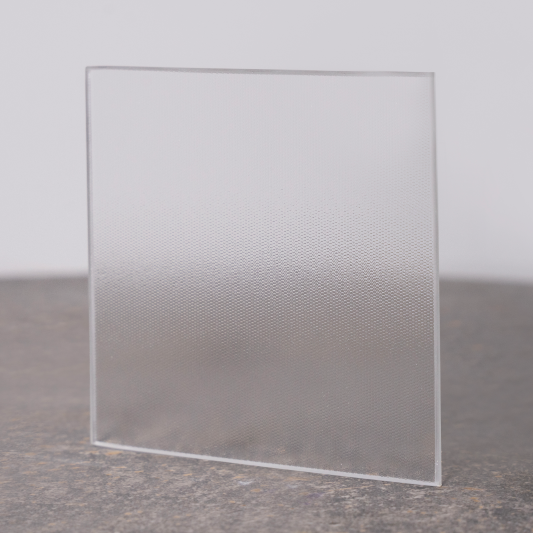
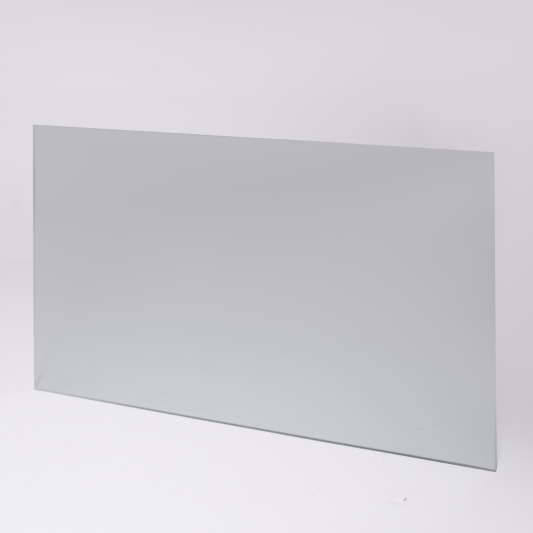
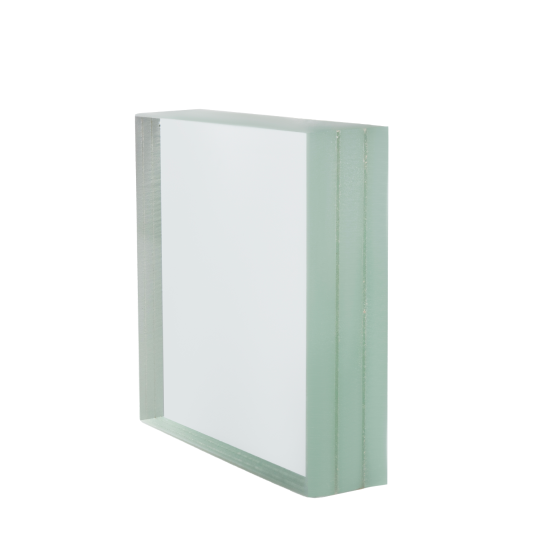
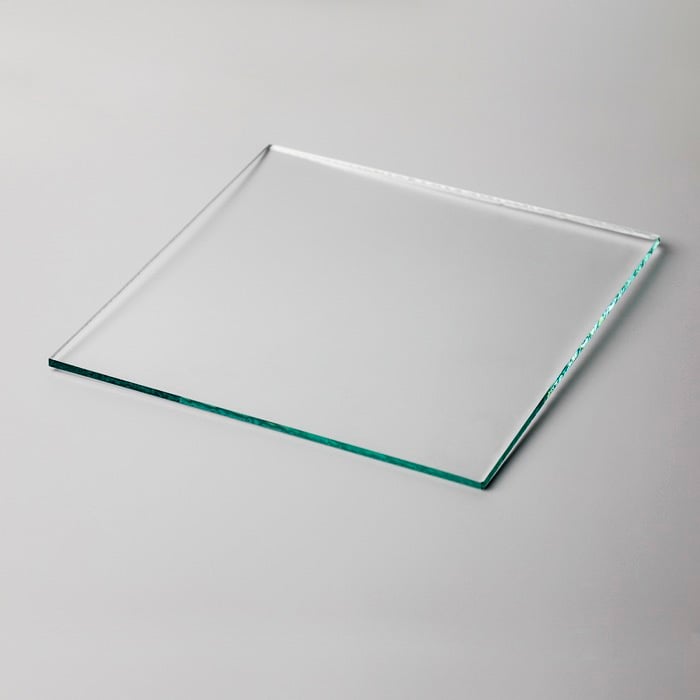
As an indispensable basic material in modern industry and construction, float glass is hailed as the "transparent cornerstone of industry" for its excellent physical properties, stable quality, and wide range of applications. From the bright curtain walls of skyscrapers to the safety windows of speeding cars, from the high-definition panels of smart homes to the touch screens of electronic devices, float glass has long permeated every aspect of production and life, silently supporting the efficient operation of modern society. It may seem ordinary, yet it embodies exquisite industrial technology and innovative wisdom. This article will take you deep into the production process, core characteristics, product classification, and diverse applications of float glass, uncovering the mysteries behind this "ordinary yet great" material.
The naming of float glass stems from its unique production process – "float forming", a revolutionary technology invented by Pilkington of the United Kingdom in 1959, which completely changed the low efficiency and poor quality of traditional flat glass production. In the 1970s, China independently developed and improved the "Luoyang Float Glass Process" with independent intellectual property rights, achieving improvements in production efficiency and product quality, and it has become the mainstream technology for global glass production. Today, the "Luoyang Float Glass Process" has been introduced and adopted by more than 30 countries worldwide. Its production efficiency is more than three times that of the traditional sheet glass process, and the product qualification rate has jumped from less than 70% to over 95%, driving the global flat glass industry to achieve leapfrog development.
The production of float glass is a "tempering of fire and water", covering five core links: raw material preparation, melting and clarification, float forming, annealing and cooling, and cutting and inspection, with each step requiring precise control. In the raw material preparation stage, various raw materials such as silica sand, soda ash, limestone, and dolomite are mixed in strict proportions. Among them, the purity of silica sand is required to reach over 99.8%, and the particle size must be controlled between 0.1-0.3mm, ensuring the stability of the glass chemical composition through precise batching. The melting and clarification stage is crucial for determining glass quality: mixed raw materials are fed into a tank furnace at a temperature of up to 1550-1600℃, melted at high temperature to form uniform glass liquid. During this process, bubbles and stones in the glass liquid are removed through processes such as bubbling and stirring to ensure the purity of the glass liquid. The float forming stage is the core of the process: molten glass liquid is continuously poured into a tin bath containing molten tin. Due to the density difference between glass liquid (2.5g/cm³) and tin liquid (6.5g/cm³), the glass liquid naturally spreads flat on the surface of the tin liquid by virtue of its own gravity and surface tension, forming a mirror-smooth original glass sheet. Then, the thickness and speed are controlled by a drawing machine, and the sheet slowly moves towards the tail of the tin bath. In the annealing and cooling stage, the original glass sheet is sent to an annealing furnace, where thermal stress inside the glass is eliminated by precisely controlling the cooling curve (gradually reducing from 600℃ to room temperature), avoiding self-explosion during subsequent use. The control of cooling speed in this stage directly affects the mechanical properties of the glass. Finally, through cutting and inspection, the edge parts of the original glass sheet are removed, surface defects are checked through an online visual inspection system, and qualified products can be warehoused or sent to the deep-processing stage. In terms of core characteristics,float glass exhibits many outstanding advantages, making it an ideal original sheet for various deep-processed glasses such as tempered glass and laminated glass . First, it has excellent surface quality: the high flatness of the tin liquid surface endows the original glass sheet with a smooth and clean surface, free of waves, bubbles, and scratches, with excellent light transmission performance. For example, ordinary float glass with a thickness of 5mm has a visible light transmittance of over 90%, far exceeding the 80% transmittance level of traditional flat glass. Second, it has good thickness uniformity: by precisely controlling the drawing speed, cooling temperature, and atmosphere in the tin bath, the thickness deviation of float glass can be controlled within ±0.05mm, far better than the ±0.5mm deviation range of traditional process products, facilitating subsequent deep-processing procedures such as cutting, coating, and tempering. Third, it has stable mechanical properties: float glass has uniform cross-sectional stress distribution, with impact strength 1.5-2 times that of ordinary flat glass and bending strength up to over 45MPa. It is also easy to cut, with cutting accuracy controllable within ±1mm, meeting the size customization needs of different application scenarios. In addition, modern float glass production generally uses clean energy such as natural gas and electricity to replace traditional heavy oil. In the production process, pollutant emissions are strictly controlled through environmental protection equipment such as desulfurization, denitrification, and dust removal. Some advanced production lines have also realized waste heat recovery and utilization, reducing energy consumption by 20% compared with traditional processes, and the recovery rate of solid waste such as glass slag reaches over 98%, fully complying with the green and low-carbon industrial development trend. Float glass has a rich range of product specifications: original sheets with various thicknesses from 1.6mm to 19mm can be produced, with a maximum width of 4.8 meters, and can be customized according to different application scenarios. According to differences in usage and performance, common float glass products are mainly divided into three categories: ordinary float glass is the basic product with the largest market demand, with thicknesses concentrated in 3-12mm, widely used in ordinary building doors and windows, furniture manufacturing and other fields, with outstanding cost performance; ultra-white float glass, known as the "crystal prince" due to its extremely low iron content (≤0.015%), has higher light transmittance (up to over 92%) and a purer appearance, with UV transmittance below 1%, and is widely used in high-end building curtain walls, photovoltaic glass, mirror making, high-end home appliance panels and other fields; colored float glass forms various colors such as tea, gray, and blue by adding metal oxide colorants (such as iron, cobalt, selenium, etc.) to the raw materials, with sunshade, heat insulation and decorative functions, suitable for building doors and windows, automobile glass, decorative partitions and other scenarios. Among them, tea-colored products can reduce solar radiation transmittance by over 30%, effectively reducing indoor cooling energy consumption.
In terms of application fields, float glass is ubiquitous and has become an indispensable basic material in modern society. In the construction industry, float glass is the core material for doors, windows, curtain walls, and partitions. After deep-processing such as tempering, laminating, and coating, it can be made into functional products such as Low-E energy-saving glass, fire-resistant glass, bulletproof glass, and insulating glass, meeting multiple needs such as building energy conservation, safety protection, and decorative aesthetics. Currently, the application rate of float glass deep-processing products in newly built public buildings has exceeded 80%, among which Low-E insulating glass can reduce building energy consumption by over 40%, becoming a standard configuration for green buildings. In the automobile industry, float glass is processed through bending, tempering, laminating, etc., and becomes the main raw material for automobile windshields, side windows, and rear windshields. Its good optical properties ensure clear driving vision, and its excellent mechanical strength and impact resistance provide solid protection for driving safety. The glass usage of a household car accounts for about 3-5% of the total vehicle weight, but it undertakes important functions such as safety protection, sound insulation and heat insulation. In the home appliance and electronics industry, float glass is used in products such as refrigerator door panels, air conditioner panels, washing machine control panels, scanner glass, and display backplanes, improving product texture and user experience with its flatness, light transmittance, and corrosion resistance. Ultra-white float glass has become the preferred material for high-end home appliances. In addition, float glass also plays an important role in furniture manufacturing, decoration, medical equipment, optical instruments and other fields, such as glass coffee tables, decorative mirrors, background walls, medical observation windows, and optical lens substrates, adding fashion and practicality to living spaces and industrial production.
It is worth mentioning that the development of float glass has always been closely accompanied by technological innovation. In recent years, with the in-depth integration of digital and intelligent technologies, the automation level of float glass production lines has been greatly improved, and the penetration rate of Internet of Things equipment has gradually increased. By installing sensors in key links such as tank furnaces, tin baths, and annealing furnaces, real-time collection of production data such as temperature, pressure, and flow is realized. Process parameters are optimized with the help of big data analysis and artificial intelligence algorithms, which not only improves the stability of product quality but also further reduces energy consumption and production costs. At the same time, new technologies and products are constantly emerging in the industry. For example, ultra-thin float glass (thickness ≤1.1mm) has been widely used in the electronic equipment field; self-cleaning float glass achieves hydrophobic and oleophobic functions through surface coating; smart dimming float glass combines electrochromic technology with float processes, expanding the application boundaries of float glass. In the future, with the advancement of policies such as green building materials going to the countryside and urban renewal, as well as the rapid development of emerging fields such as building-integrated photovoltaics, smart buildings, and new energy vehicles, the market demand for float glass as a basic material will continue to grow steadily. At the same time, float glass will continue to upgrade towards thinner, stronger, more energy-saving, and smarter directions, providing solid support for the sustainable development of modern society.
From the bright curtain walls of skyscrapers to various daily necessities, float glass supports the operation of modern society with its unique properties. Understanding the characteristics and applications of float glass can not only help us better select and use related products but also let us feel the life changes brought by the development of industrial technology. This "transparent cornerstone of industry" is continuously empowering the high-quality development of various industries with an innovative attitude.
 Hot News
 EN
EN